Is There Really a Strategy Behind Trump's War with Iran?
Analyzing the pro-Trump case for the Iran War

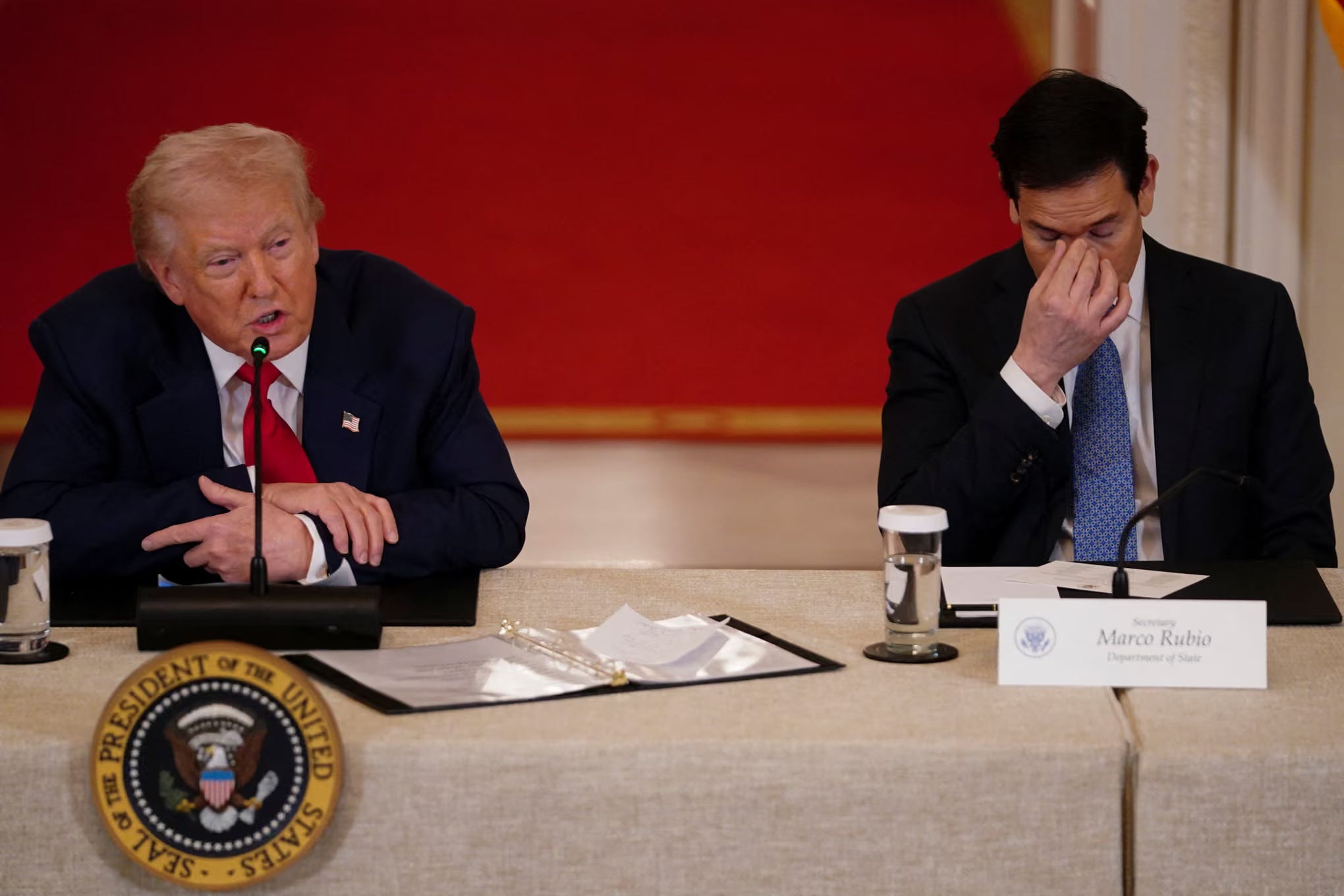
Last week, I posted a discussion with Jeremy Schapiro about the Iran war, its consequences and the decision-making behind it. And while I always get interesting feedback, what struck me this time in the reaction to the episode was how differently people interpret the decision to launch the war.
And it’s not just in the comments of my podcast. Instead, an intellectual debate has emerged about why this war actually happened in the first place - and with that an implication of whether the decision to start the war made sense or not.
Basically, since the war began, two very different interpretations of the decision have emerged.
The first sees the war largely as the result of impulse, emotion and ego. In this view, the decision was driven by a combination of short-term incentives, mainly a political pressure from Israel, and an emotional, instinctive decision-making: mainly by the euphoria of the earlier success of the operation in Venezuela, and the idea that if it was that easy to take out Maduro and replace him with a friendlier alternative, it will be just as easy to do the same in Iran. In other words, that there was not much thought given to why exactly the U.S. should launch the war, what will be its consequences, what can go wrong or what is the plan B - and everything that has been happening since has been a free-wheeling panicked improvisation.
The second interpretation is almost the exact opposite: the war should be understood and has been launched as part of a broader foreign policy strategy. In this interpretation, Iran has long been seen as one of the main sources of instability in the Middle East and a potential rogue nuclear power - both of which have long forced the U.S. to remain engaged in the Middle East and expand its resources on countering and containing the threat. According to this narrative, the Iran war was launched to remove that threat once so that the United States can finally withdraw from the region and focus on its real strategic priority: China. At the same time, weakening Iran would also indirectly hurt China, arguing China has deep economic ties with Tehran and relies on Iranian oil. In other words, this war engages U.S. in the region so that it can disengage from it - and the war is just one step in a far more complex game of geopolitical chess.
What I find fascinating is how different both interpretations are and yet almost all the observers of this conflict fall into one of these two camps. Personally, my interpretation of the war is much closer to the first one but since some people that I respect argue for the latter, I wanted to look at it in good faith - and explain why I disagree with it without immediately discounting it entirely.
In my view, the second interpretation - we can call it “the Trump’s Grand Strategy” - has intuitive appeal. Iran’s nuclear ambitions are real, its support for proxy groups across the region has long destabilized the Middle East and China does buy Iranian oil and aligns with Iran in its anti-U.S. worldview. Viewed from this perspective, the war might appear as a strategic, rational attempt to reshape the regional balance of power while simultaneously advancing broader strategic goals.
But the problem with this interpretation is that once you look more closely, it begins to fall apart.
The First Problem: It Doesn’t Fit How Trump Operates
If you think that the Iran war is not that much about Iran but really about China, you assume the existence of a certain grand strategy - a long-term coherent vision for how you want the world to look and a specific plan for how to get there. And that requires a certain kind of leadership. It requires a decision-maker who thinks in long time horizons, carefully weighs geopolitical consequences, and executes a coherent plan over a number of thoughtfully planned out steps.
But nothing about Donald Trump’s political behavior over the past decade suggests that this is how he approaches major decisions.
Trump’s political style has consistently been driven by short-term incentives and immediate benefits. His priorities have tended to revolve around issues that produce visible, tangible outcomes right now: reducing trade deficits, imposing tariffs, securing economic deals, or pursuing symbolic geopolitical goals such as acquiring Greenland. His rhetoric around military operations has often focused on direct and immediate gains: securing oil, boosting personal prestige, punishing adversaries who have insulted him, expanding U.S. territory and so forth.
Even the Venezuela operation that preceded the Iran war was framed in exactly these terms. Trump described it as a way to secure oil, punish Nicolás Maduro, and demonstrate strength. There weren't really any broader geopolitical aims behind it - or at least Trump himself has never spoken about it in that way.
Believing that the Iran war is part of a carefully constructed grand strategy requires assuming that Trump suddenly began operating in a way he never has before.
The same problem applies to the China argument. If the war were truly part of a broader effort to counter China, we would expect to see consistent policies pointing in that direction.
But the evidence suggests otherwise. Trump, just to name a few examples, has both allowed Nvidia to resume selling advanced H200 chips to China, reversing years of export control policy designed specifically to slow China’s technological progress and has also signaled weaker U.S. commitments to Taiwan.. Neither move suggests that confronting China is the overriding strategic priority driving American policy.
Sure, there are people in or around the administration for whom this is the overriding strategic priority - and they are naturally interpreting the decision to go to war with Iran this way. But what’s crucial is that they did not make this decision - Trump did. And his own personal motivation and incentives are likely very different.
Taken together, it is difficult to reconcile the idea of a sophisticated China-containment strategy with the actual pattern of decisions being made.
