Will the Iran Regime Fall? The Two Things That Will Decide Its Future
The next 24-48 hours are absolutely crucial

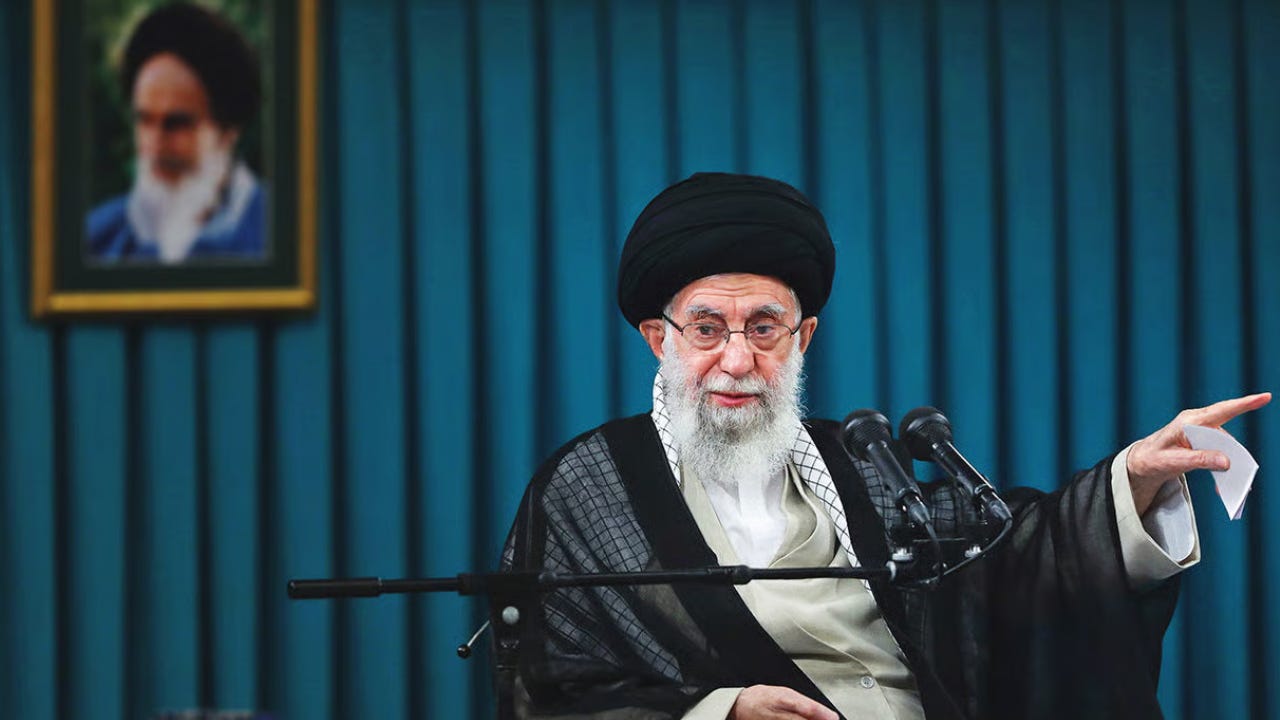
Yesterday, I wrote about the reasons and context of the attack on Iran. Today I want to follow up and take a closer look at the odds of whether the Iran regime will fall - because the next 48 hours are likely to be critical.
And there are two very specific variables, both of which will play out in the coming hours and days, that will shape the answer to this question.
1) Protests
The first key variable is whether we will see a restart of mass, popular protest - basically a continuation of the mass protests that were suppressed in January 2026. And the instinctive expectation is that they are likely to restart.
There are already reports of people celebrating Khamenei’s death, at least in Tehran and for many Iranians who despise the regime, this feels like a historic opening - perhaps the biggest one in years. If there was ever a reason to return to the streets, this would be it and even after the mass crackdowns, there are almost certainly still hundreds of thousands of people willing to take to the streets.
But the thing about protest dynamics is they are not always “mechanical” and logical - they don’t usually go from 0 to 100 overnight. They are organic in how they form and they typically gather momentum over days and weeks, as we saw in January. Especially if - as is the case in Iran - there is no single organizer and no unified opposition leader who can simply “call” the protests back into existence at scale and when the regime has taken down internet, cell connection and landlines across the country. That makes organizing or even just finding out what other people are doing even more difficult.
And speed matters - if there is a window of opportunity, it may remain open only briefly, only as long as the regime is shaken. A protest movement that needs time to build may miss the moment when the regime is at its weakest.
Which brings us to the second variable.
2) Regime Capability
The second key question is how deep is the shock inside the system: how much of its capacity to act and respond has been taken away - and how long before it will recover this ability?
In the opening salvo, U.S./Israeli forces have successfully eliminated both Ali Khamenei and around 40 other senior leaders within the regime which would deal an enormous shock to any government structure. Decapitation is, by definition, destabilizing - it creates chaos, possible issues over succession in a number of roles and in the very least, slows down a reaction time of the regime to any unpredictable developments on the ground - hence opening a window for a successful uprising.
But the question is how functional the regime remains and there are two broad possibilities, based on how well Iran has prepared for this eventuality.
Option one: there were no serious contingency plans for succession in the event of assassination. That would mean a complete chaos at the top and infighting within elite circles over who gets to be in charge resulting in a paralysis - precisely at the moment the regime needs to be united and able to coordinate its actions. In that scenario, the state apparatus becomes temporarily incapacitated.
Option two: there were plans for temporary succession mechanisms and they will be followed. In such a case, it will be immediately clear who now has the authority, at least temporarily, which will prevent infighting and reduce chaos - meaning that the security apparatus and the regime absorb the shock and remain operational.
The difference between those two outcomes will play an enormous role.
Three Scenarios
If you combine these two variables - protests and regime capability - you get three plausible pathways for what happens in the coming days:
1) Regime incapable + protests restart at scale
This is the most dangerous combination for the system. A paralyzed elite facing mass mobilization dramatically increases the probability of regime change. In this scenario, the days of ayatollahs are likely over.
2) Regime capable + protests do not restart en masse
In this case, the regime likely survives. The shock becomes a contained event, repression remains effective and the system stabilizes.
3) Regime capable + protests restart
This is the most volatile scenario. A functional but threatened regime will almost certainly respond with overwhelming force likely resulting in a major bloodshed. In this scenario, basically anything can happen - the regime may fall, survive, the country may completely destabilize - options are wide open.
The next two days are now absolutely critical because they will tell us which path we are most likely on.
But there is another additional layer to this dynamic as well - because what happens over the next two days will likely shape the next course of action for Donald Trump and the U.S. military.
If it starts to look like the regime will hold - there won’t be mass protests and the regime will not completely disintegrate, my guess is that Trump will instinctively seek to de-escalate. As Axios reported yesterday, Trump has already floated the idea of taking an off-ramp:
“I can go long and take over the whole thing, or end it in two or three days and tell the Iranians: ‘See you again in a few years if you start rebuilding [your nuclear & missile programs].”
But if it looks like the regime is cracked and it could fall, we might see the opposite. If mass protests re-emerge and the regime is incapable to immediately crack down in force, Trump might continue and double down to help the regime fall - and in such case, we might see an escalation.
In other words, the domestic trajectory inside Iran and the external trajectory from the United States are intertwined.
In any case, the next 24-48 hours are crucial - and these are the things to watch.
When faced with notorious assassins you would have to be very stupid not to have a succession strategy. The Ayatollah was 86 -, he could have died in his bed anytime. Of course there is a plan. Xx
There are two variables and therefore there must be four scenarios.
Such a pity that you left out the scenario of incapable regime and no protests, which is exactly what appears to be happening.